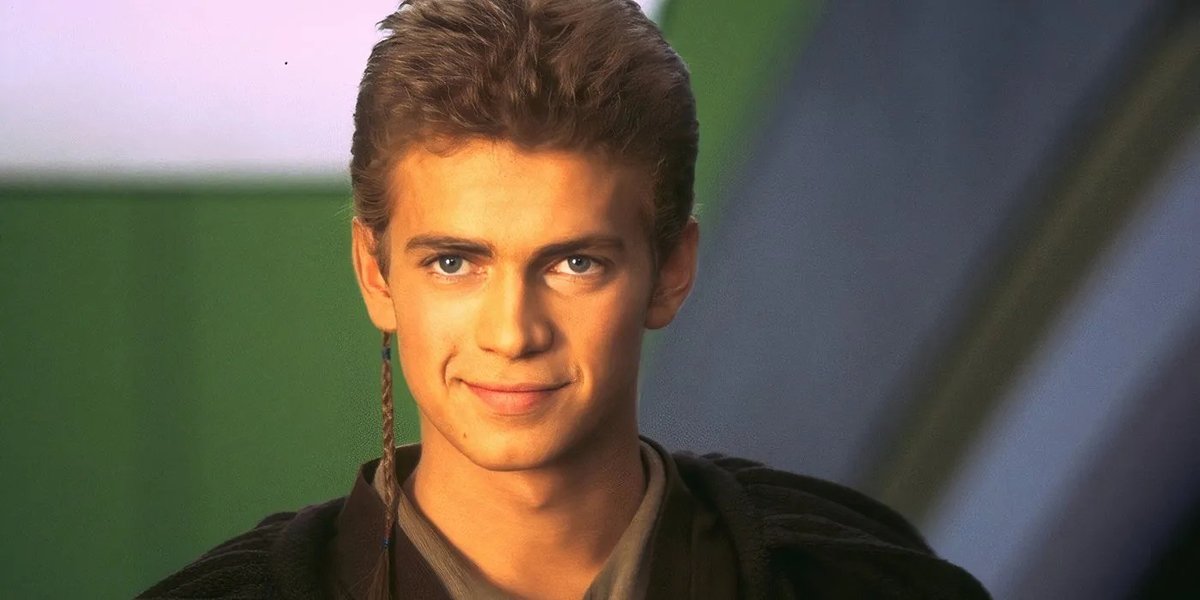
Hayden Christensen's Performance as Anakin in Attack of the Clones Gets New Appreciation: A Deep Dive
When Star Wars: Episode II – Attack of the Clones first hit theaters in 2002, Hayden Christensen's performance as Anakin in Attack of the Clones became an immediate lightning rod. Critics and many fans pointed to line delivery, awkward romantic dialogue, and an overall "whiny" demeanor as flaws that detracted from the character's much-anticipated journey toward Darth Vader. Fast forward two decades, and the narrative has dramatically shifted. What was once seen as a weakness is now widely celebrated as a nuanced, intentional portrayal of a deeply troubled young man, making Christensen's work a cornerstone of modern Star Wars storytelling.
This isn't just a simple shift in opinion; it's a re-evaluation of intent, context, and the complex psychological underpinnings of one of fiction's most iconic villains. Let's unpack how Christensen's Anakin went from critical punching bag to beloved, tragic figure.
At a Glance: Hayden Christensen's Anakin in Attack of the Clones
- Initial Reception: Largely mixed to negative, earning a Golden Raspberry Award.
- Current Standing: Widely re-evaluated and appreciated for its depth and intentional awkwardness.
- Key Challenges: Portraying a complex emotional arc, delivering George Lucas's distinctive dialogue, and dealing with immense pressure.
- Character Portrayed: Anakin Skywalker at 19, grappling with forbidden love, Jedi dogma, and internal turmoil.
- Why the Shift? Fans now see his performance as a deliberate depiction of a young man lacking emotional guidance, whose volatility and immaturity are crucial to his eventual fall.
- Enduring Legacy: His portrayal continues to influence current Star Wars live-action and animated series.
The Audition That Sealed His Fate: A Burden of Expectations
Imagine being 19 years old and stepping into a role previously embodied by a child actor and slated to become one of the most feared villains in cinematic history. That was the immense weight on Hayden Christensen's shoulders. George Lucas and casting director Robin Gurland reportedly reviewed 1,500 candidates for the part. Household names like Leonardo DiCaprio, Ryan Phillippe, Paul Walker, Colin Hanks, Heath Ledger, and Christian Bale were all considered.
So, what made Christensen stand out? According to Lucas, it was his "dark side" chemistry with Natalie Portman (Padmé Amidala) and his raw, untapped talent. He embodied the vulnerability and intensity required to hint at the monster within, even as he tried to project an image of confident heroism. This casting decision, made amidst such a star-studded shortlist, speaks volumes about the specific qualities Lucas sought for Anakin Skywalker's full character arc.
Walking the Tightrope: Challenges of the Prequel Dialogue
One of the most persistent criticisms leveled against Christensen's performance, particularly in Attack of the Clones, revolved around his line delivery. Phrases like "I don't like sand. It's coarse and rough and irritating and it gets everywhere. Not like here. Here everything is soft and smooth" became instant meme fodder. Yet, much of this dialogue style wasn't Christensen's invention; it was an inherent characteristic of George Lucas's scripting.
Lucas often favored a more formal, almost mythological cadence over naturalistic speech, a stylistic choice that proved challenging for many actors in the prequel trilogy. Christensen was tasked not just with reciting these lines, but with injecting them with the genuine emotion of a young man struggling with nascent feelings and an overbearing sense of destiny. His portrayal had to bridge the gap between this formal language and the simmering passion and frustration of Anakin. It’s a nuanced discussion, often intertwined with George Lucas's distinctive dialogue style itself.
Unpacking the Performance: Moments of Raw Emotion in Attack of the Clones
While the romantic dialogue often drew the most ire, Christensen's performance in Attack of the Clones is punctuated by powerful moments that foreshadow his tragic descent. These instances, often overlooked in initial reviews, now shine brightly, revealing the depths he brought to the character.
The Weight of Loss: Shmi Skywalker's Grave
Perhaps the most pivotal scene for Anakin's turn to the dark side in Attack of the Clones isn't a grand battle, but a quiet, intimate moment. After the horrific Tusken Raider massacre, Anakin lays his mother, Shmi, to rest. Christensen's quiet grief as he murmurs, "I miss you, Mom. So much," is profoundly impactful. It's not theatrical wailing, but a broken, internal ache that feels all too real. This moment, more than any other, grounds his motivations and signals the first major cracks in his Jedi resolve, revealing how profoundly Anakin's story in Episode 2 is shaped by loss.
Confession of Rage: "I Hate Them!"
Following Shmi's death, Anakin confesses his unspeakable act to Padmé. Christensen's chilling delivery of "I hate them!" after recounting his slaughter of the Tusken Raiders is a visceral jolt. His voice trembles with barely contained fury, his eyes reflecting a terrifying, unbridled rage that horrifically previews the violence to come. It’s an uncomfortable scene, deliberately so, portraying a hero on the precipice of absolute moral collapse. This is not the clean, heroic Jedi; this is a young man consumed by vengeance, utterly lacking the emotional regulation his training should have instilled.
The Crucible of Geonosis: Controlled Despair
When Padmé falls from the LAAT gunship on Geonosis, Anakin's distress is palpable. Yet, at Obi-Wan's urgent command ("Anakin, no!"), Christensen's Anakin manages to pull himself together, shifting his focus from grief to the immediate threat. This moment showcases a fleeting, almost instinctive attempt at emotional control, a Jedi reflex battling his overwhelming personal feelings. It highlights the internal war raging within him, a war he would ultimately lose.
Lightsaber Prowess: A Prodigy's Edge
Despite the emotional turmoil, Christensen also physically embodied Anakin's prodigious talent. His impressive lightsaber work during his first fight with Count Dooku, though ending in defeat, demonstrated the character's raw power and untamed skill. It was a testament to the tireless training Christensen undertook, establishing Anakin as a formidable warrior even at this early stage. This physical performance underscored the "chosen one" prophecy and the immense potential that made his fall even more tragic.
The Reassessment: Why the Perception Shifted
The transformation in how fans view Hayden Christensen's performance is a fascinating case study in the fascinating evolution of fan reception. What once felt like poor acting now resonates as deliberate character work. Here’s why:
- Contextual Re-evaluation: As fans grew older and The Clone Wars animated series (and later Revenge of the Sith) provided more depth, it became clear that Anakin's awkwardness and emotional volatility weren't flaws in the performance, but integral aspects of a deeply troubled character. He was a teenager, burdened by immense power and expectation, lacking the emotional guidance a stable family or even a truly empathetic Jedi Council might have provided.
- Intentional Awkwardness: His "irrational emotions" on Naboo, his clumsy attempts at romance, and his unbridled passion are now seen as realistic portrayals of a young man overwhelmed by feelings he's been taught to suppress but never truly process. This portrayal makes his subsequent turn to the dark side more believable; he wasn't a sudden monster, but a troubled soul pushed past his breaking point.
- The Arc's Completion: With Revenge of the Sith, Christensen completed Anakin's tragic journey. His portrayal of Anakin's shock and guilt after Mace Windu's death ("What have I done?"), the ultimate betrayal on Mustafar, and his delusional rhetoric about bringing "peace, freedom, justice, and security" to 'his' new Empire solidified the performance. The seeds planted in Attack of the Clones blossomed into the terrifying Vader, making the earlier awkwardness seem less like a misstep and more like crucial foundational work for the enduring legacy of the Star Wars prequels.
Beyond Attack of the Clones: The Enduring Legacy
Christensen's work didn't end with Revenge of the Sith. His connection to the character and the Star Wars universe has only deepened over time.
- The Original Trilogy Re-edit: In a move that underscored his importance to the character's full arc, George Lucas replaced Sebastian Shaw's Force Ghost with Hayden Christensen's image in the 2004 DVD release of Return of the Jedi. This decision aimed to represent Anakin's "true" self before his fall to the dark side, solidifying Christensen's place as the definitive Anakin Skywalker.
- Return in Obi-Wan Kenobi (2022): His celebrated return in the Disney+ series Obi-Wan Kenobi saw him don the iconic Darth Vader suit once more. But more poignantly, he appeared as prequel-era Anakin in flashbacks and visions, including a powerful "split-mask" confrontation with Obi-Wan. This allowed him to revisit and expand upon the very performance we're discussing, showcasing the internal battle between the man and the machine.
- A New Facet in Ahsoka (2023): Perhaps the most remarkable aspect of his return was in the Ahsoka series, where he portrayed Clone Wars-era Anakin within the World Between Worlds. This required him to embody a version of the character he hadn't played in live-action, one shaped by Matt Lanter's beloved animated portrayal. Christensen committed fully, watching The Clone Wars to master Anakin's dynamic with Ahsoka Tano, blending the animated character's swagger and warmth with his live-action intensity. This dedication highlights his profound understanding and respect for Anakin's complex history and his willingness to embrace the unique challenges of taking on iconic roles.
Addressing Common Misconceptions
Was Christensen just a "bad actor" in Attack of the Clones?
No. While his performance initially faced harsh criticism, a deeper look reveals that many perceived "flaws" were integral to portraying Anakin as a deeply conflicted, emotionally immature young man. He was tasked with showing the seeds of Vader, not a fully formed hero.
Did Lucas's dialogue make the performance harder?
Absolutely. George Lucas's distinctive dialogue style often requires actors to find truth within a more formal, almost operatic delivery. This is a unique challenge that can feel unnatural to modern audiences accustomed to realistic, conversational exchanges. Christensen had to perform within these parameters while also conveying immense emotional turmoil.
Is the shift in fan perception just nostalgia?
While nostalgia plays a part in any long-running franchise, the re-evaluation of Christensen's Anakin goes beyond it. It's an analytical appreciation of his choices within the character's broader arc, especially as The Clone Wars filled in many gaps and Revenge of the Sith delivered on the tragic promise. It speaks to a more mature understanding of character development and the pressures faced by the actors and filmmakers.
The True Measure of an Iconic Performance
Hayden Christensen's performance as Anakin in Attack of the Clones stands as a testament to the evolving nature of art and audience reception. It’s a powerful reminder that initial reactions don't always capture the full scope or intent of a creative work. From awkward teenager to menacing Sith Lord and ultimately, a redeemed Force Ghost, Christensen’s portrayal has anchored the journey of one of cinema’s most complex figures.
His dedicated return to the role in recent years has only cemented his legacy, demonstrating his deep connection to Anakin and his willingness to refine and expand upon his original vision. Far from being a misstep, his Attack of the Clones performance is now largely seen as a crucial, courageous foundation for the hero who fell, making his journey all the more poignant and devastating. It's a performance that truly "gets new appreciation," finding its rightful place in the pantheon of Star Wars storytelling.